What is an AI video prompt checker?
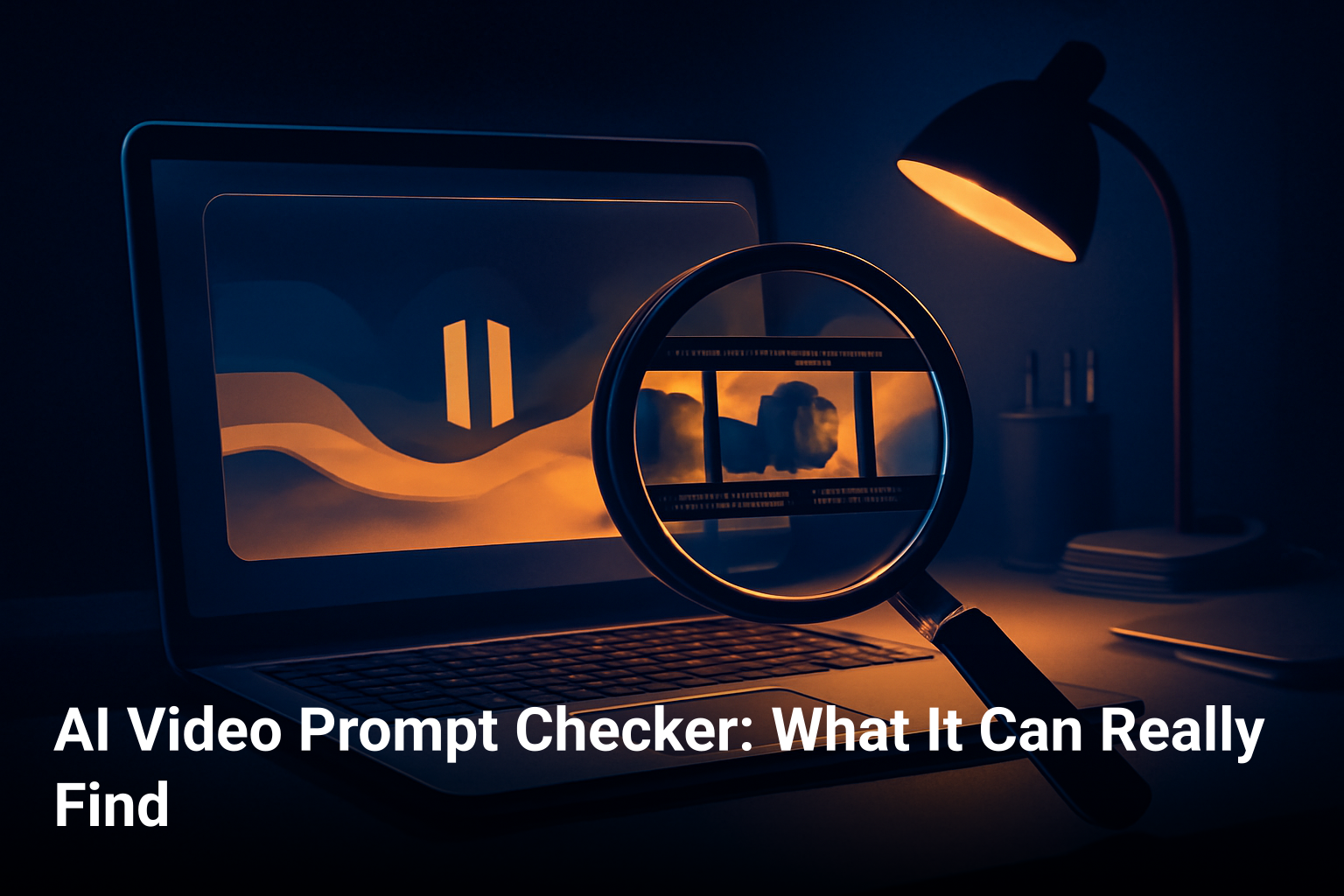
An AI video prompt checker is a tool that helps you investigate the instructions behind an AI-generated video. Depending on how it works, the tool may look for a prompt that the creator publicly shared, or it may analyze the video itself and produce a careful reconstruction of what the prompt might have contained.
That distinction matters. A checker is not automatically reading a hidden prompt embedded in the video. Most published videos contain only visual and audio output, not the original text sent to a model. The tool can inspect available clues and describe visible choices, but it cannot prove the exact wording, model settings, seed, reference image, or editing steps used by the creator.
In practical terms, the best tools combine source checking with visual analysis. They can help answer questions such as: Was a prompt included in the YouTube description? Did the creator mention it in a pinned comment? If no prompt was disclosed, what subject, setting, camera movement, lighting, style, and action would a useful recreation prompt need to include?
Two ways a prompt checker can work
The first method is prompt discovery. A tool checks the video’s description and comments for creator-disclosed information. Some creators publish the full prompt, while others share only a shortened version, a workflow, or a list of settings. When a matching prompt is found in a public source, it should be presented as disclosed information, with its source made clear.
The second method is prompt reconstruction. If the description and comments do not contain a usable prompt, an AI vision model can examine selected frames from the video and write a best-effort guess. It may identify a close-up of a glass object on a dark table, a slow forward camera movement, warm rim lighting, shallow depth of field, and a cinematic commercial look. Those observations can then be organized into a prompt you can test.
These methods should never be confused. A disclosed prompt is evidence of what the creator shared. A reconstructed prompt is an interpretation based on the result. A trustworthy AI video prompt checker labels the difference instead of presenting an educated guess as the original text.
What the analysis can realistically identify
Video analysis is most useful for visible and describable elements. A checker can often identify the main subject, environment, colors, composition, apparent lens perspective, lighting direction, motion, pacing, and broad visual style. It may also notice continuity details, such as a character turning toward the camera or an object remaining centered as the camera tracks sideways.
For example, suppose you upload a short clip showing a robot walking through a rainy neon street. A useful reconstruction might mention a humanoid robot, reflective pavement, blue and magenta signs, falling rain, a low-angle tracking shot, atmospheric haze, and realistic cinematic lighting. That gives you a strong starting point for testing the idea in a video generator.
The result can also reveal omissions in your own prompting. You may remember the character but forget the camera movement, background depth, weather, or lighting contrast that makes the clip recognizable. Treating the output as a structured visual breakdown is often more valuable than expecting one magical sentence to reproduce every frame.
What it cannot know from pixels alone
No tool can recover an exact original prompt from pixels alone. Different prompts can produce similar results, and the same prompt can produce very different results because of the model version, random seed, guidance settings, reference images, motion controls, and post-production. A creator may also have generated several clips, selected one, extended it, added sound, or edited multiple shots together.
Visual evidence cannot reliably reveal private instructions or invisible choices. It cannot confirm whether the creator used a negative prompt, an image-to-video workflow, a particular camera preset, an upscaler, or manual compositing unless those details were disclosed elsewhere. Even apparent camera movement may have been created through keyframes, editing, or a simulated effect.
This is why careful wording matters. “The video appears to use a slow dolly-in” is more honest than “the original prompt said slow dolly-in.” Likewise, “possible recreation prompt” is more accurate than “extracted prompt” when the tool is inferring text from frames. Realistic expectations make the output more useful, not less.
How to use an AI video prompt checker
Start with the source rather than immediately asking for a visual guess. Copy the YouTube URL or provide the video file, then check the description for phrases such as “prompt,” “workflow,” “made with,” or “AI settings.” Look through pinned comments and creator replies as well, because prompt details are often posted there instead of in the main description. A guide on how to read a YouTube description can help you search more systematically.
If no creator-disclosed prompt is available, upload a representative video or let the tool analyze extracted frames. Short clips with clear subjects and visible movement are usually easier to interpret than long compilations with rapid cuts. When possible, choose a section that shows the main visual idea, because unrelated shots can cause the reconstruction to blend multiple scenes into one inaccurate prompt.
Review the result in parts: subject and action, setting, composition, camera, lighting, style, and technical constraints. Then revise it for your target generator. A reconstruction may describe what is visible but leave out duration, aspect ratio, motion strength, or continuity instructions. Testing one change at a time will tell you which details actually affect the result.
When the results are most useful
An AI video prompt checker is especially helpful when you want to study a reference, rebuild a concept, or understand why a clip feels distinctive. A marketer can break down the visual language of an advertisement before creating an original variation. A filmmaker can turn a mood reference into a shot description. A creator can use the reconstructed prompt as a starting point instead of writing every detail from scratch.
It is also useful for learning prompt structure. Compare the visible outcome with the generated description and ask which words control the subject, which describe movement, and which establish mood. If you are trying to extract a prompt from video, remember that the goal is not to claim ownership of an unknown original. The goal is to create a testable description grounded in what the footage actually shows.
For a practical starting point, try the tool with a YouTube video whose description and comments may contain a disclosed prompt. If none is found, it can analyze the available frames and return a clearly labeled reconstruction. You can try the AI video prompt checker to investigate a reference clip and turn its visible qualities into a prompt you can refine.



Leave a Reply