What does it mean to reverse engineer a marketing video?
To reverse engineer a marketing video means to work backward from the finished ad and identify the creative decisions that produced it. Instead of starting with a product brief and writing a script, you begin with the visible result: the opening hook, visual style, pacing, message, voiceover, calls to action, and audience positioning.
For example, a 20-second skincare ad might open with an extreme close-up of dry skin, cut to a product texture shot, show a person applying the cream in soft window light, and finish with a confident product claim. Reverse engineering turns those observations into a usable creative blueprint rather than merely describing what happened on screen.
The process is useful for marketers studying competitors, creative teams building a variation, and AI video creators looking for a starting prompt. It does not mean copying another brand’s protected assets or assuming that every production decision can be recovered. The goal is to understand the ad’s structure and recreate its creative logic in an original way.
Break the ad into its key creative parts
Start by watching the video several times with a different question each time. On the first pass, identify the central promise: is the ad selling convenience, status, savings, performance, or an emotional outcome? On the second, note every scene change and estimate how long each shot lasts. On the third, listen for wording, sound effects, music changes, and moments where the product or logo receives emphasis.
Then create a simple shot list. Record the subject, setting, camera angle, movement, lighting, color palette, on-screen action, and transition for each shot. A useful entry might read: “medium shot of runner tying shoes at dawn, cool blue light, handheld camera, quick cut to close-up of sole.” This level of detail is much more actionable than “a sporty ad with fast editing.”
Do the same for the marketing layer. Identify the target viewer, likely funnel stage, objection being answered, proof being offered, and final call to action. A polished video can look cinematic while using a very simple persuasion sequence: problem, demonstration, benefit, proof, and invitation. Finding that sequence is often more valuable than imitating its surface appearance.
What video-to-prompt tools can realistically do
A video-to-prompt tool can help organize observations from a marketing video into a descriptive prompt or creative brief. Depending on the tool, it may inspect a YouTube description and comments for a prompt the creator has openly shared. If no disclosed prompt is available, it can analyze selected frames and reconstruct a best-effort description of the visible content.
That distinction matters. Pixels can show a red sneaker, a tracking shot, dramatic lighting, and a city street, but they cannot reveal the exact wording originally entered into an AI model. They also cannot reliably recover hidden negative prompts, reference images, seed values, model settings, editing decisions, or instructions that never appeared in the final frames. Any service claiming exact prompt extraction from pixels alone is overstating what is possible.
A reconstructed prompt should therefore be treated as a practical starting point, not historical evidence. It may say that a video appears to use a low-angle product shot, warm commercial lighting, shallow depth of field, and a fast push-in. Those details can guide a new generation, but the result may still differ because AI models interpret language differently and marketing videos are often edited from many separate clips.
A practical workflow for reverse engineering an ad
Begin with the original source whenever possible. Check the video description, pinned comments, creator posts, and accompanying case study for a disclosed prompt or production notes. Copy any relevant wording separately from your own interpretation. Labeling those two categories prevents an inferred description from accidentally being presented as the creator’s original work.
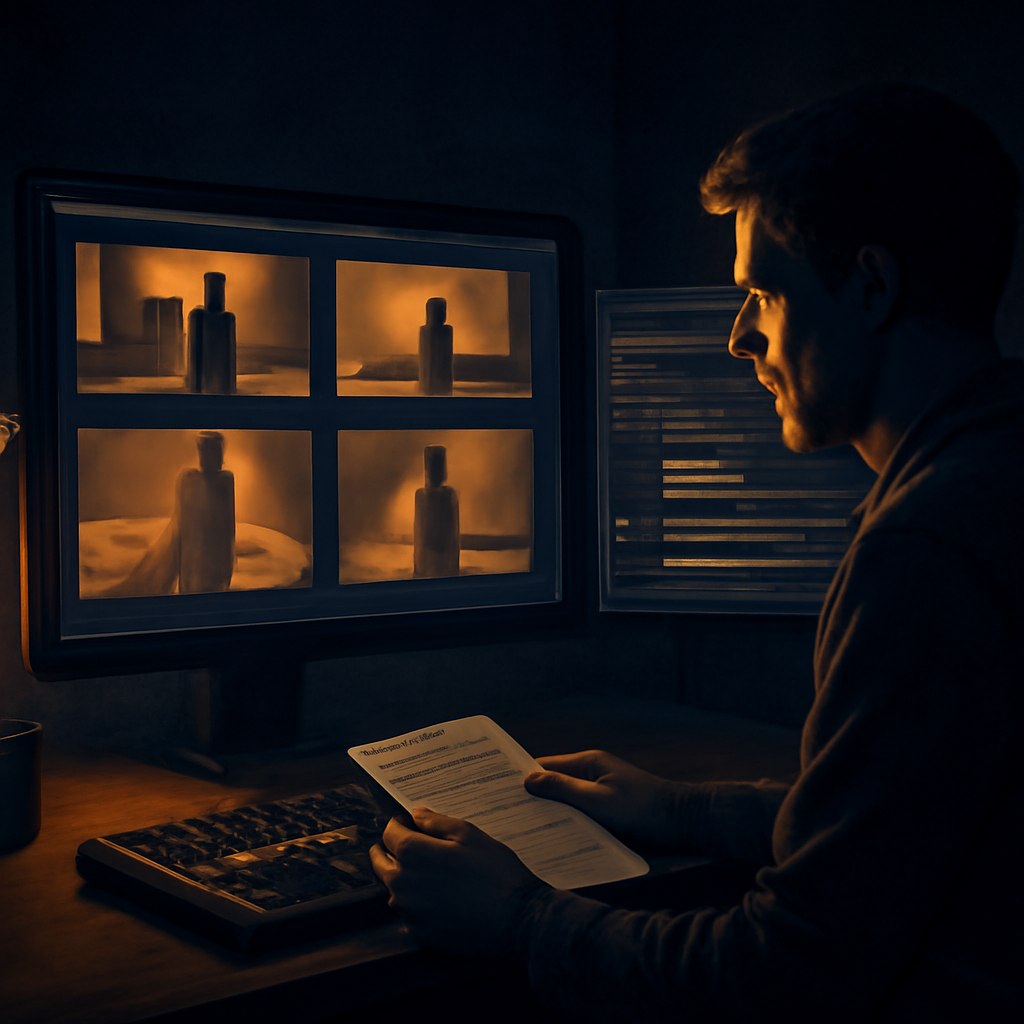
Next, analyze the video in sections rather than trying to summarize everything at once. Pick representative frames from the opening hook, product reveal, main demonstration, emotional payoff, and closing call to action. For each frame, write what is certain, what is likely, and what is unknown. For instance, you may know that a bottle rotates, infer that a turntable was used, and have no way to know whether the shot was AI-generated or filmed practically.
Finally, turn the findings into a testable brief. Include the subject, action, environment, composition, movement, lighting, tone, duration, aspect ratio, and intended audience. Generate one variation at a time, then compare it against the original at the level of communication: does the first second create curiosity, is the benefit clear, and does the ending tell viewers what to do? Visual similarity alone is not a marketing strategy.
Common mistakes that lead to weak reconstructions
The biggest mistake is treating a finished ad as if it came from one perfect prompt. Many marketing videos combine live footage, AI-generated clips, stock assets, motion graphics, voiceover, music, and several rounds of editing. A single reconstructed prompt may describe the visual style well while missing the script, post-production, brand guidelines, and conversion goal that made the ad effective.
Another mistake is using vague adjectives without observable detail. Words such as “epic,” “premium,” and “viral” do not tell a video model what to render. Replace them with specifics: polished black countertop, controlled rim light, slow macro camera movement, restrained luxury palette, and a two-second product close-up before the benefit statement. Concrete language gives you something to test and revise.
It is also easy to confuse resemblance with originality. Reconstruct the underlying approach, then change the product context, setting, casting, color system, copy, and shot order where appropriate. Avoid lifting logos, slogans, distinctive characters, or a competitor’s exact claims. A reverse-engineering exercise should help you learn why an ad works, not encourage a near-duplicate that creates legal or brand problems.
Use the result as a starting point for better creative
The most useful output is usually a structured hypothesis: what the video is trying to achieve, how its scenes support that goal, and which visual ingredients are worth testing. Ask your team to challenge the hypothesis. Does the opening communicate the product quickly? Is the proof credible? Would the same structure work for a different audience or platform? These questions turn analysis into actual creative improvement.
Keep confidence levels visible in your notes. Mark creator-disclosed information as confirmed, frame-based observations as visible, and inferred production details as uncertain. This simple habit makes collaboration easier and prevents a guessed camera model, prompt phrase, or generation method from becoming an unsupported fact in a campaign brief.
If you want to examine a YouTube marketing video or upload a file for frame-based analysis, try the video-to-prompt tool. It checks for a creator-disclosed prompt first and labels any AI-generated reconstruction clearly when no original prompt is available. Use the result as a fast research aid, then apply human judgment, brand strategy, and original creative decisions before producing your own ad.




Leave a Reply